Negotiating With Anxiety and OCD Carries A Cost
Negotiating with anxiety and OCD seems like a good idea in the heat of the moment, but there is a cost over time.
Anxiety and OCD will suggest course changes, avoidances, safety behaviors and rituals to help you feel safer and more in control of things. Alone, each of those little accommodations feels reasonable. Like it’s no big deal, right? Just being cautious, right? But when we add them all up over time, life quickly becomes highly restricted and almost unrecognizable and then we have a real problem.
Are You Subscribed To My Newsletter? Recovery tips. Updates on recovery resources. Encouragement. Inspiration. Empowerment. All delivered to your inbox! Subscribe here FREE. More Ways To Listen/Watch My Podcast: Listen on Apple Podcasts | Listen on Spotify | Listen on Amazon Music | Watch on YouTube Helpful Recovery Resources: My Books | FREE Resources | Courses and Workshops | Disordered (with Josh Fletcher)
The Never Ending Anxiety Cycle
People with anxiety disorders and OCD are driven to perform compulsions, rituals, avoidances, escape behaviors, and safety behaviors to address intense feelings of discomfort, fear, or anxiety. Sometimes the things an anxious person does to feel better in the moment are behavioral, sometimes they are mental and kinda hidden from the rest of the world.
We’ve talked about this kind of thing over and over on this podcast so you can go back and listen to any number of previous episodes about avoidance, control strategies, safety behaviors, and compulsions for more on this concept.
The summary is:
- Feel terrible now
- Act now
- Feel a little better now
- Repeat forever and wonder why the cycle never ends
In The Heat Of The Moment
When in a triggered moment, when a huge wave of fear, anxiety, uncertainty, or doubt crashes on your head, all those avoidances and compulsions sure seem like the right thing to do. They feel correct. They tend to lead to temporary relief from the terrible feeling, which makes them seem even more correct. This is part of the cycle. The part where you might be a long-time listener of The Anxious Truth and say, “I get it, but when I’m triggered it all goes out the window!”
It all goes out the window because the feeling of threat or danger is strong and therefore convincing. You wanna feel better right away and calling a safe person or getting your ice packs or performing an OCD compulsion seems to accomplish this so what’s the problem? You’ve achieved your goal, right?
But afterward … you haven’t achieved your goal. You’ve ritualized simple tasks or spent hours on compulsions or once again retreated from your life and followed the fear and at some point you hate that you keep doing this. So why do you?
The Second “Gotcha”
Once the emergency passes, when cooler heads are prevailing again, you may try to find the resolve to not let that happen again. Next time, you promise yourself, you won’t be fooled. You’ll face the fear. Accept. Allow. Willfully tolerate. Not compulse or ritualize. This is admirable, but that huge spike of discomfort makes this difficult in the heat of the moment as we’ve seen already.
But there is a second “gotcha” that tends to poison what feels like an otherwise well reasoned plan. This is the part where each individual compulsion or avoidance or control attempt feels reasonable. Like it’s no big deal. It’s just one small thing. One skipped event that you didn’t even really want to go to. Just a few minutes of extra shoe tying or counting or reciting specific prayers or song lyrics. Where’s the harm in that? It makes you feel safer and it doesn’t really impact all that much so what’s the harm?
The thing is, this is not wrong. Each individual fear and control driven response to an anxiety or OCD trigger seems reasonable, even when calm. None ruins or totally changes a life on its own. They tend to be small and at face value given how little impact they each appear to have when examined in a vacuum, it starts to feel like giving in and doing that one thing is just being smart, or cautious, or efficient.
The second gotcha tends to lead to statements like:
“I’ll just do this one thing so I can feel better and move on or I’ll be stuck”
“Wouldn’t anyone want to make sure they aren’t having harm thoughts? It’s no biggie. It’s just being cautious, right?”
“It feels so risky to give up my calming or fixing things so I’ll just do them a little. That will be fine.”
Do these sound familiar at all?
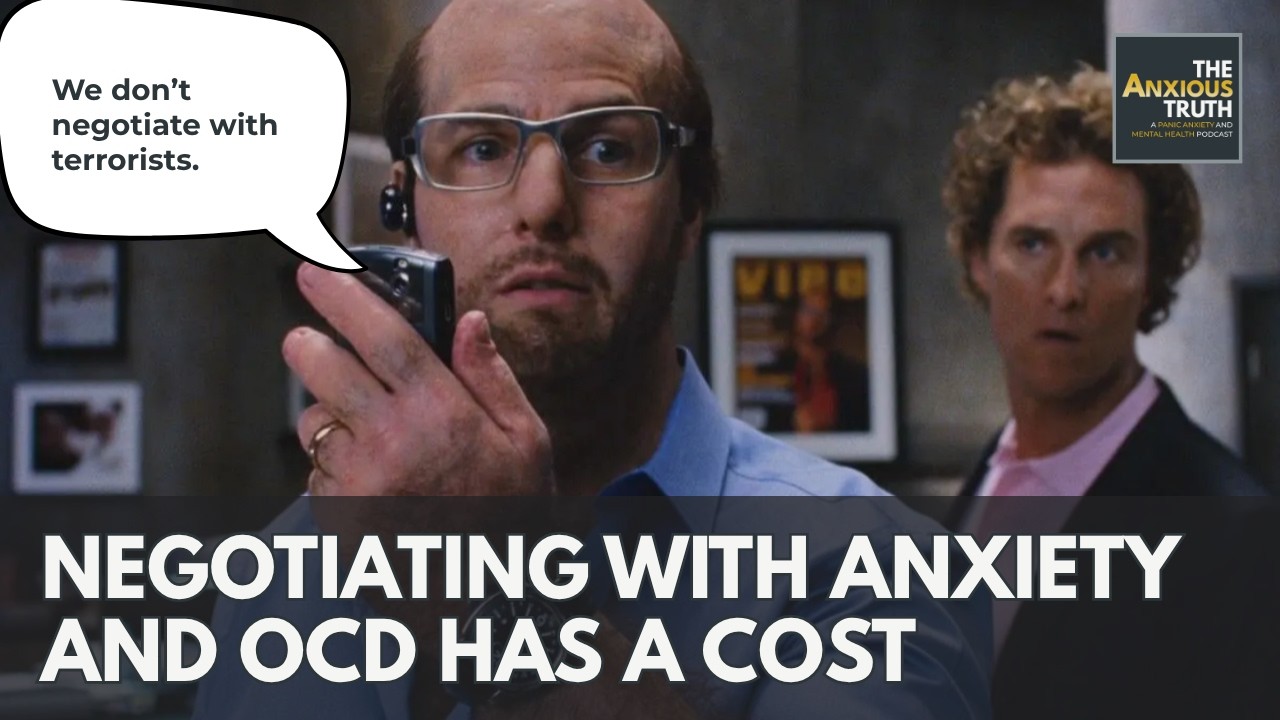
“We Don’t Negotiate With Terrorists”
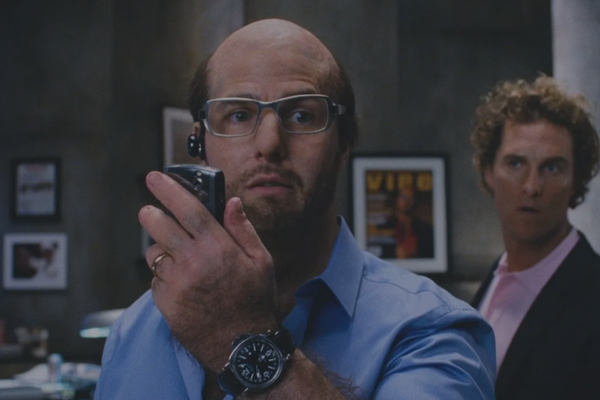
One of my favorite silly scenes in any movie is Tom Cruise as Les Grossman unleashing an “unholy f*cking firestorm” upon Flaming Dragon in “Tropic Thunder”. It’s a goofy movie.
After Les finishes his tirade, the Flaming Dragon guys call back later to increase their extortion / ransom demands. Les totally disrespects them and winds up hanging up on them, declaring, “We don’t negotiate with terrorists.”
Kills me every time.
It’s an over the top comedy, but Les Grossman has a point. We don’t negotiate with terrorists because when we give them anything, they know they have us and they never actually go away.
Same applies here. When you start to rationalize escape, control, avoidance, and compulsion as reasonable or frame it in a “just in case” container you are negotiating with your anxiety or your OCD. They are, for all intents and purposes, terrorists. They insist that you do things you do not want to do to satisfy them and once you do them, you have to keep doing them. They never go away. They will always push for more. They are not reasonable. They are not logical. They only want what they want and when you give it to them you have a bigger problem than you already had because they’ll start harassing you in all kinds of different areas and looking for all kinds of different vulnerabilities to exploit.
Adding It Up
Here’s the major takeaway from today. It is true that in most cases any individual ritual or safety behavior or avoidance seems like it might be reasonable, warranted, and no big deal.
But when you add up ALL your rituals, avoidances, control strategies, and safety behaviors suddenly the terrorists are everywhere and you have to ask their permission to do anything. Your life gets smaller and smaller and harder and harder. Restrictions mount. Anxiety and OCD keep adding more rules and guidelines. The goalposts keep moving. There is not appeasement, bargaining, or being reasonable.
It doesn’t matter that one anxiety or OCD accomodation in the heat of the moment is no big deal. What happens if you zoom out and look at the impact of all the accommodations and fear driven responses you’ve now built into your life and your daily routine? What do they add up to? What is the total cost of that strategy on your ability to function and live the life you want?
We care about the total impact and the cumulative cost. We never care about one ritual or one safety behavior examined by itself.
So What Do We Do?
Awareness is a big part of this. As usual. One of the reasons we use principles of mindfulness in this approach to anxiety and OCD is that mindfulness is just increased awareness. Remaining aware of this trap – the propensity to rationalize one avoidance as being OK – is the most important part. Why?
In a triggered moment when we use the ACT triflex to keep us out of the avoidance and control strategy trap, we want to be able to accurately and objectively describe that moment without telling stories or making predictions from what we feel.
The ACT Triflex:
“I’ve just been triggered. Now I’m afraid and that makes me want to (insert safety behavior or ritual here) to feel better quickly. THAT FEELS LIKE A GOOD MOVE AND LIKE NO BIG DEAL BUT DOING THIS ONE THING MAKES MY LIFE WORSE SO IT IS A BIG DEAL”.
If you can see that process unfolding this way and identify it, you’ve won half the war already. One option in that triggered moment would be to save yourself as usual and to therefore negotiate with the terrorist. Give in to that one demand because it seems to solve the problem.
But the better option is to not do that. To explore your capability and your capacity to handle temporary distress and discomfort so you can learn from that. There is negotiation in there. No “Just this one thing”. No “Just in case”. It’s OK to acknowledge that the fear makes you want to rationalize and negotiate, but ultimately we have to make the brave choice to not do that any more.
Little By Little
I’ll wrap up with a reminder that nobody instantly eliminates all rationalization, negotiation, and compulsion/safety behaviors in one swipe. That is just not an actual thing. You may want to do that. Maybe after hearing this episode you’re feeling all jazzed up and inspired and you’re sure you can really hold your ground next time and change EVERYTHING in one moment of clarity and resolve. But the odds of that happening are slim and that’s OK. If I were your therapist I would never expect that kind of outcome. I’d work with you to chip away at that old framework and that old strategy bit by bit. I’d remind you that every time to make a change and learn something about anxiety, OCD, and yourself as part of the process, you are winning.
Just like each specific compulsion or avoidance can’t ruin your life by itself, no one individual exposure, act of tolerance, or flash of insight can fix your life all by itself.
Please keep that mind so you don’t wind up disappointed and declaring yourself a failure because “it all went out the window” again.
Links Of Interest
- Want to discuss this episode with me and others that share your experiences?
- Disordered – With Josh Fletcher
- My Substack
- Find my “Practical Mindfulness for Anxiety Recovery” Groups
- Low cost anxiety/recovery educational workshops
- The Books I’ve Written on Anxiety and Recovery
- Follow me on Instagram
- My YouTube Channel
Disclaimer: The Anxious Truth is not therapy or a replacement for therapy. Listening to The Anxious Truth does not create a therapeutic relationship between you and the host or guests of the podcast. Information here is provided for psychoeducational purposes. As always, when you have questions about your own well-being, please consult your mental health and/or medical care providers. If you are having a mental health crisis, always reach out immediately for in-person help.
Are You Subscribed To My Newsletter? Recovery tips. Updates on recovery resources. Encouragement. Inspiration. Empowerment. All delivered to your inbox! Subscribe here FREE. Helpful Recovery Resources: My Books | FREE Resources | Courses and Workshops | Disordered (with Josh Fletcher) | Join My Instagram Subscriber Group
Podcast Intro/Outro Music: "Afterglow" by Ben Drake (With Permission)
