
Anxiety and “almost” drive the cycle
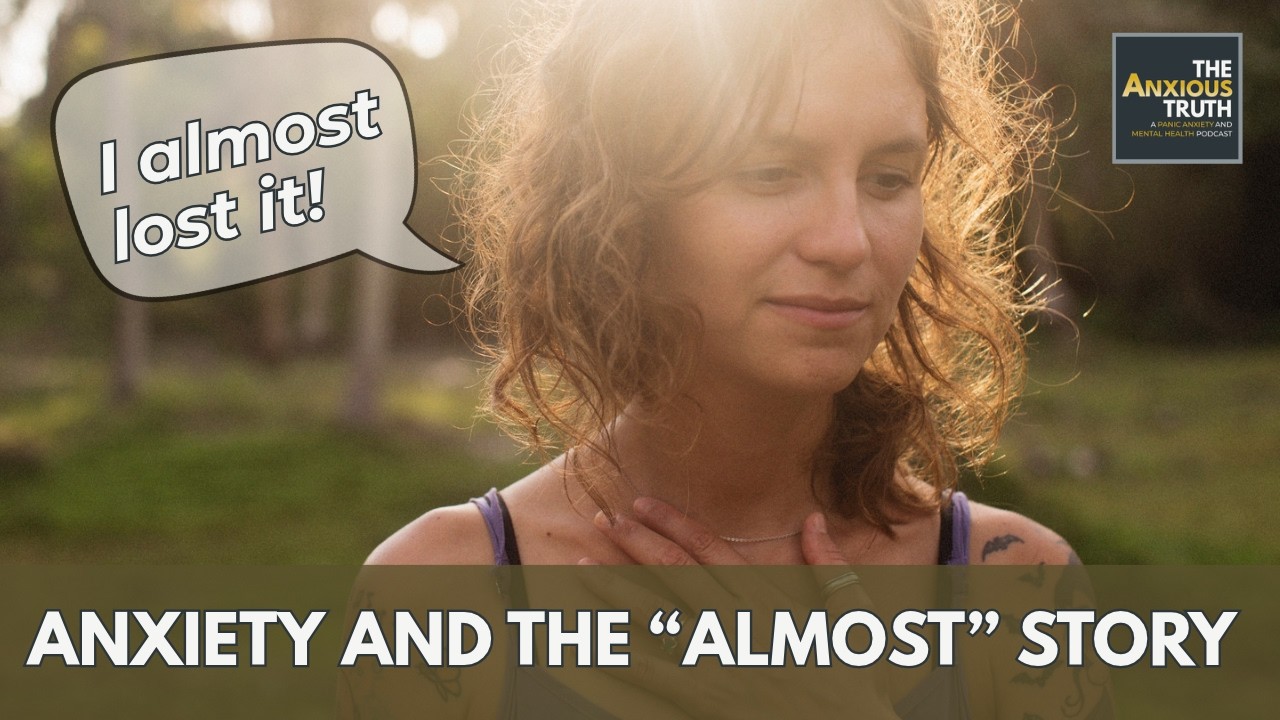
Anxious minds gripped by anxiety disorders and/or OCD really get stuck on “almost”. The feeling that something horrible “almost” happened is one of the factors that fuels the repeating anxiety and OCD cycle. The specific events or outcomes that “almost” happen vary from person to person, but the process is always the same. In this episode we want to talk about why treating “almost” like a fact interferes with the process that drives recovery and improvement.
Are You Subscribed To My Newsletter? Recovery tips. Updates on recovery resources. Encouragement. Inspiration. Empowerment. All delivered to your inbox! Subscribe here FREE. More Ways To Listen/Watch My Podcast: Listen on Apple Podcasts | Listen on Spotify | Listen on Amazon Music | Watch on YouTube Helpful Recovery Resources: My Books | FREE Resources | Courses and Workshops | Disordered (with Josh Fletcher)
The natural rise and fall of discomfort.
The process of recovery from an anxiety disorder or OCD is based squarely on learning through repeated intentional experiences that the actions taken when triggered do not get the credit for dampening or resolving the anxious or fearful state. An anxious person in the recovery process chooses to expose themselves to triggers and practice ritual and response prevention to learn that the compulsions, rituals, saving strategies, attempts to regulate the nervous system, and escape plans are not needed.
Why? Because even when we don’t do those things, we wind up on the other side of the discomfort peak. Human minds are simply not designed to keep individual feelings almost indefinitely. They ALL rise and fall on their own. When we see this and learn this lesson through experience, the fear of our internal state begins to fade. This is kinda everything because its the fear created by thoughts, emotions, and physical sensations that drives the disorder.
“Almost” blocks the lesson.
An anxious person that insists that they almost passed out, almost lost control, or almost did something they dread or abhor is operating under the assumption that the action they took to avoid this nightmare gets the credit for saving the day. This means they then operate from the assumption that the only way to stay safe and avoid the physical, cognitive, social, or moral disaster they fear is to keep repeating those actions. Welcome to the anxiety and OCD cycle where every trigger gets a “fixing” response that leads to feeling better in the moment only to repeat this process again and again every few hours or every day. Anyone listening to this podcast episode understands this process and wants nothing more than to break or stop it from repeating.
There was no “almost”. No matter how real that felt.
We must see “almost” as a cognitive distortion. A catastrophic interpretation and prediction fueled by how strong some feelings can be in the moment. We’re not trying to take away anyone’s experience here. We have to acknowldge that in a triggered moment it sure feels like something horrible is about to happen or that you are doomed to a disastrous fate that you are about to seal if you don’t take some kind of evasive action. This is why anxious people and people with OCD listen to this podcast, understand every word, then declare that “it all goes out the window” the minute they feel a scary sensation or have a highly triggering disturbing thought. The response to those thoughts and sensations is powerful. The fear and sense of dread, disgust, or doom is real. It’s normal for people struggling with these problems to get tricked repeatedly into blindly and automatically following those strong feelings in a desperate attempt to feel safer or calmer in a difficult moment.
This is also why courage is such a big part of this process, something I will keep acknowledging, especially when people dumb this down to “just do it”. It’s really hard to be brave and NOT take that saving or ritual action to feel better, which is why its so easy to wind up stuck and frustrated.
But in the end, we must accept the fact that there never was an “almost”. You did not almost die, pass out, lose control, go insane, or doom the world to destruction. None of those outcomes were going to happen so the thing you did to prevent them was theater. Fake. Lots of action and energy spent and hand wringing for show. Your anxiety and OCD puts on a huge display and it sure seems like all that stuff was needed and got the job done, but in the end that is simply not true.
There was no almost because feelings, emotions, thoughts, and sensations are not predictions or instructions in this context. Treating them as such is part of what creates the problem we’re addressing together.
Where does “almost” show up?
When I wrote The Anxious Truth I talked about how recovery is the process of changing your reaction to anxiety, fear, and discomfort (not about controlling it, preventing it, or avoiding it). I talked about three reactions to anxiety. The reaction before, the reaction during the triggering event, and the reaction afterward. For our purposes today I want to talk about the before and after reactions.
Anticipatory anxiety. The reaction before fueled by the “almost” narrative. After you narrowly avoid the certain death of everyone you love by counting that special pattern in your head for 90 minutes, you’ll insist that you have to remain on the lookout for the next indication that you have to save them again. You begin to anticipate a repeat performance because you “almost” hit that dreaded wall and need to be on guard to be sure you don’t actually hit it next time, right?
The same can be said for the somatically focused anxious person that insists that they almost passed out and now remains on guard all the time for signs of lightheadedness, dizziness, unsteadiness, or air hunger. If last time it “almost” happened then they have to be ready for the next time. Or so says the overprotective anxious brain.
For a cognitively or emotionally fixated anxious person, the “almost” story might involve narrowly avoiding making a huge scene, alienating their friends or social group, or accidentally destroying an important intimate relationship. Those stakes feel high, so being on the lookout for the next possible disaster seems warranted.
The “almost” cognitive distortion appears in anticipatory anxiety.
It gets there when you declare on the back end of that panic attack or OCD storm that the thing you did to save yourself fixed everything. You ritualized, compulsed, escaped, avoided, or got saved and you found some relief. The air went out of the feeling of fear, horror, or dread, so the thing worked, right? The story you tell after the triggered moment has resolved (partially or completely) is the “almost” “story showing itself clearly. The more you repeat the “almost” story to yourself or anyone that will listen, the more you fuel that anticipatory anxiety and the less likely you are to be able to break the anxiety and OCD cycle.
Look for your “almost” narrative when you’re starting to calm down, telling the story of what happened, and looking out for the next nightmare. Its in there.
So what do we do with “almost”?
As expected, we work on being aware of it, then we consider what other options we have. If you can be mindfully aware of that “almost” story being written or spoken again in your head rather than just taking it as unassailable fact without question, you can start to shift things bit by bit. If “almost” is in fact just a scary story and not a fact, then what might happen if you change that story or at least challenge it.
That might look something like this:
“Wow that was really scary. That fear was so strong I can see it trying to convince me that I was in the edge of disaster. I notice a strong drive to tell the almost story again.”
Clearly, this is quite simplified. It’s going to vary from person to person, and even then the exact wording and internal experience is going to change from day to day or even hour to hour. But the first move you want to make is to recognize that “almost” is a story, not an accurate description of the events that just took place.
Think of the “almost” story as the spin you see when you consume news in 2026. Doesn’t matter what your politics or ideology is, we all recognize that we’re being told what to think and believe rather than just being told what actually happened. Being fed fear and outrage works. It keeps our attention, and the part of your brain in charge of safety and survival knows this. It will tell the “almost” story to keep you on guard and therefore safe, but as it turns out you don’t have to be on guard to be safe.
What might happen if you open up to other options and consider a different possible interpretation of events? Its OK to say that it was scary and difficult because that part is always true. But when you hear the word “almost” coming out of your mouth (literally or symbolically) what might change if you challenge that?
“Oh, there’s that old story again. I need to toss that, be brave, and act like nothing really happened here other than being triggered, anxious, afraid, and uncomfortable.”
I know, this is a big ask. This is where bravery enters the picture because you likely still believe that disaster story. You still feel worried. Dropping your defenses will still feel risky or reckless. But when your brain wants to fuel anticipatory anxiety with “almost” and you choose to bring that discomfort with you into the life you actually care about rather than making it the most important thing in the room, you are winning.
When your anxious mind insists that you must repeat the ritual or compulsion or safety plan because “almost” , but you choose to let the fear play itself out without doing those things again, you are winning.
This is what the process looks like, but you know this already if you’ve hung around here long enough. If nothing else today, I hope I’ve given you something to chew on and a better understanding of how the “almost” narrative fuels the cycle you’re so desperate to break.
Links Of Interest
- Want to discuss this episode with me and others that share your experiences?
- Disordered – With Josh Fletcher
- My Substack
- Find my “Practical Mindfulness for Anxiety Recovery” Groups
- Low cost anxiety/recovery educational workshops
- The Books I’ve Written on Anxiety and Recovery
- Follow me on Instagram
- My YouTube Channel
Disclaimer: The Anxious Truth is not therapy or a replacement for therapy. Listening to The Anxious Truth does not create a therapeutic relationship between you and the host or guests of the podcast. Information here is provided for psychoeducational purposes. As always, when you have questions about your own well-being, please consult your mental health and/or medical care providers. If you are having a mental health crisis, always reach out immediately for in-person help.
Are You Subscribed To My Newsletter? Recovery tips. Updates on recovery resources. Encouragement. Inspiration. Empowerment. All delivered to your inbox! Subscribe here FREE. Helpful Recovery Resources: My Books | FREE Resources | Courses and Workshops | Disordered (with Josh Fletcher) | Join My Instagram Subscriber Group
Podcast Intro/Outro Music: "Afterglow" by Ben Drake (With Permission)
